
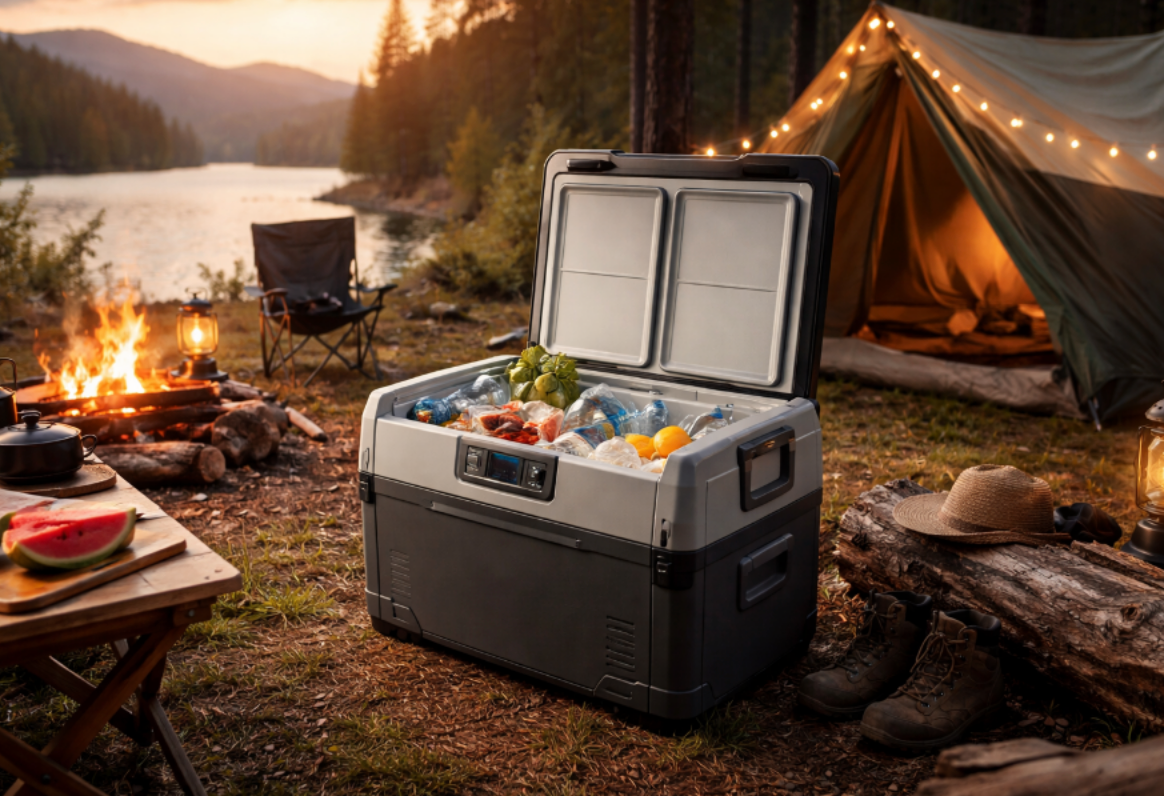
Camping begins with a lot of excitement, and storing food can soon turn into a repetitive issue. Ice melts quicker than it should, wrapping gets wet, and keeping food fresh becomes a continuous struggle. Consequently, you end up spending time in supply management, rather than enjoying the outdoors. A portable fridge alters that dynamic by providing consistent cooling and better storage control.
Nevertheless, not all of them provide equal performance. Some cannot perform well during hot weather, while others are not efficient or flexible.
Knowing what is really important helps you overcome these constraints and select a solution that is reliable in real scenarios.
In this article, you’ll learn exactly what to look for in a portable fridge for camping so you can make a confident and practical decision.
- Compressor-Based Systems for Better Performance
Cooling technology is the most crucial aspect to consider since it directly influences the performance of your portable fridge when outdoors.
A typical modern mobile cooler intended to be used in camping is also a compressor-based cooler that operates similarly to a normal refrigerator. This is important as it enables the unit to sustain constant temperatures irrespective of the surrounding environment. In moderate weather or extreme heat, compressor systems still maintain their performance without any compromise.
In contrast to simple cooling systems, compressor units are able to actively cool and freeze, reaching low temperatures that are conducive to meat, frozen meals, and dairy storage. This renders them suitable for long journeys where food conservation is a priority.
Moreover, modern compressors have variable-speed technology, which implies they regulate power consumption according to cooling needs. Consequently, they remain efficient with consistent performance.
When camping involves long periods or hot weather, compressor-based cooling is not only a good choice but a necessity to ensure reliable operation.
- Temperature Range and Precision Control
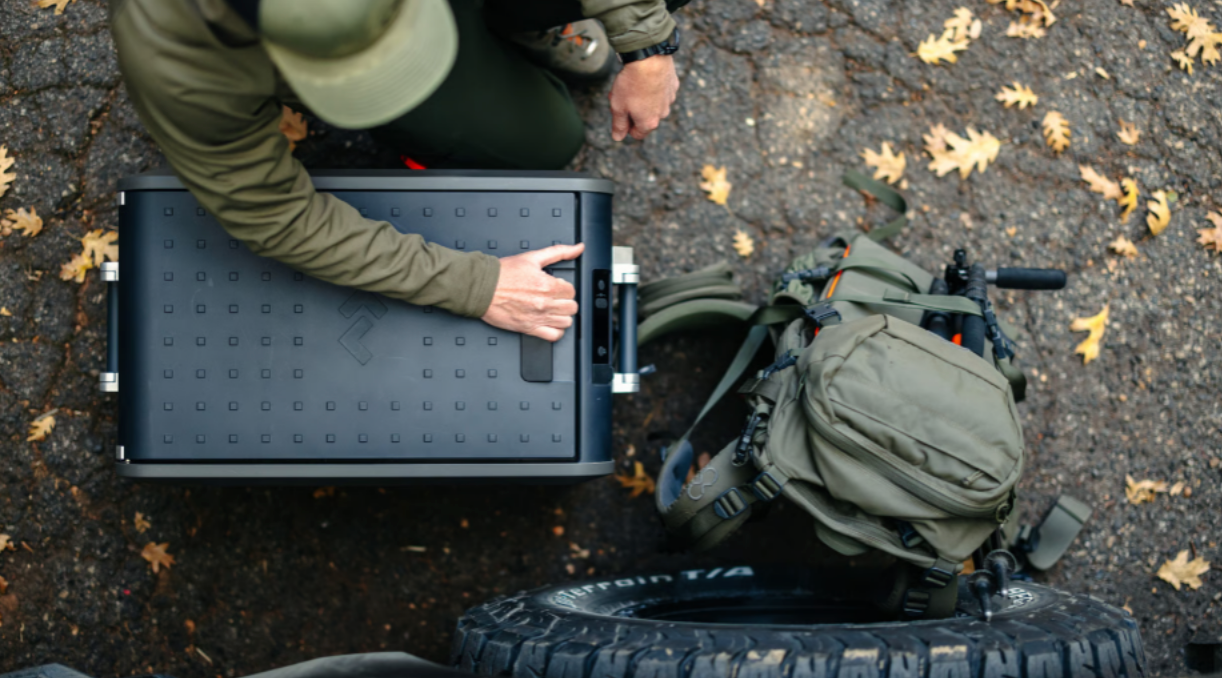
After learning about the cooling system, the next thing to consider is temperature range and control accuracy. This determines how flexible your fridge will be during different types of trips.
Portable fridges with high quality give a large temperature range, and you can easily switch between refrigeration and freezing, depending on what you need. This allows flexibility so you can store various items freely.
Additionally, the contemporary units have digital temperature controls, which offer accurate adjustments rather than trial and error. This assists in maintaining a stable internal condition, which is crucial for food safety.
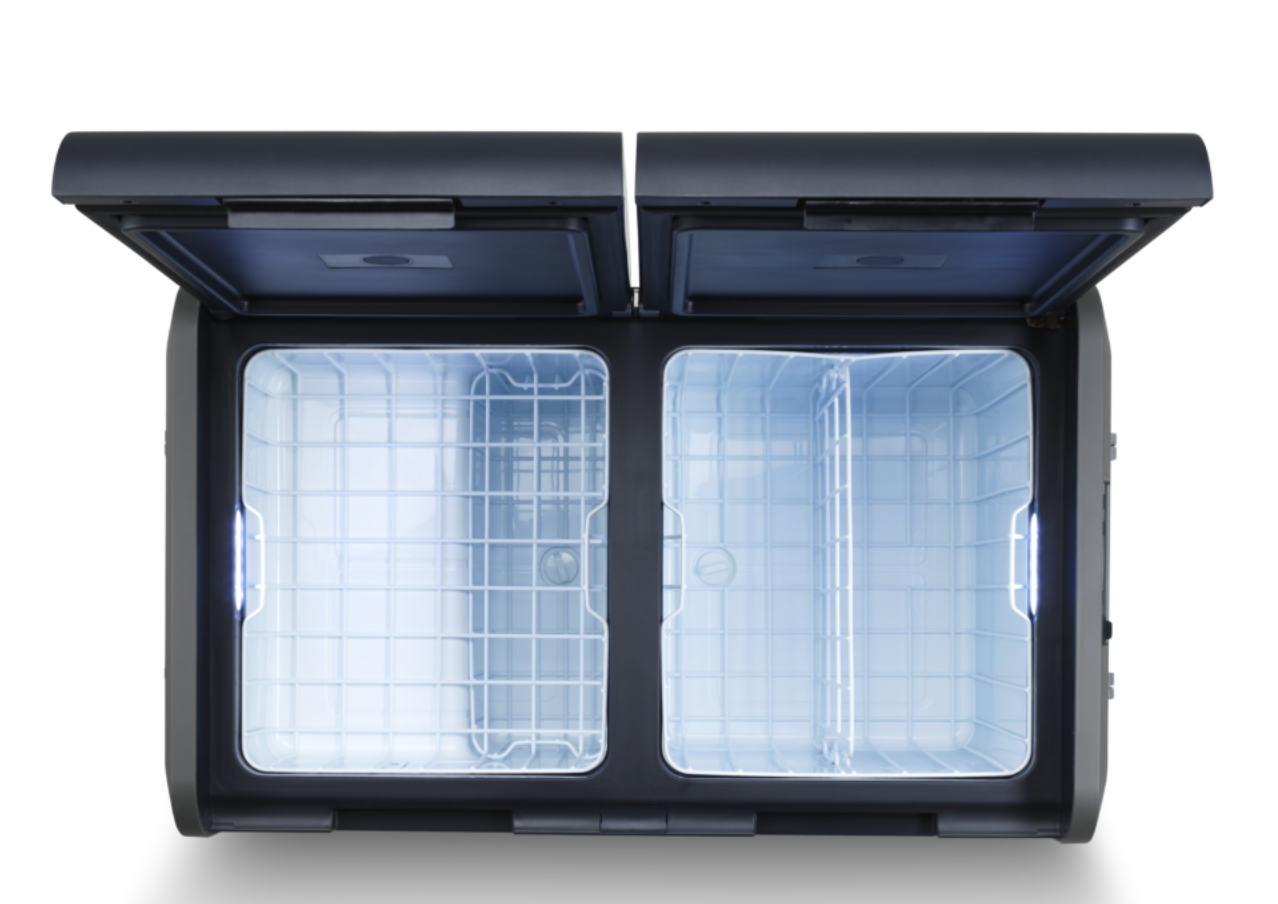
Dual-zone is another valuable feature. Certain sophisticated models enable you to subdivide the fridge into distinct sections with varying temperature levels. Due to this, you are able to store frozen drinks and, at the same time, freeze other items.
With this degree of control, you can better organize your storage, avoiding waste and enhancing convenience during your trip.
- Power Options and Energy Efficiency
A mobile fridge should be able to adjust to various settings, so power flexibility is one of the major factors.
Most high-performance units use a variety of power sources, such as:
- 12V or 24V DC for vehicle use
- AC power to connect to the home or campsites
- Portability, battery compatibility, or solar compatibility
This flexibility will keep your fridge running when you are behind the wheel, in a camp area, or even off the road.
Nevertheless, compatibility is just as important as energy efficiency. An inefficiently optimized fridge might drain your vehicle battery, which can be incredibly inconvenient.
To prevent this, seek characteristics like Built-in battery protection systems, energy-efficient compressors, and adjustable power settings for various use cases.
These options enable your fridge to operate longer without impacting your main power source.
Consequently, an energy-efficient model will help in maintaining reliability and peace of mind when travelling long distances.
- Capacity and Internal Storage Design
The selection of the correct capacity is critical, yet must always be in line with your intended use of the fridge.
Begin by reflecting on how many individuals will be on your trip, how long you will spend camping, and what food and beverages you intend to bring.
The use of an example, a short trip can only need a small storage space, but a longer trip or a group trip will need a larger storage capacity.
Capacity is, however, not sufficient. The internal design is an important factor in usability. Properly designed portable fridges consist of:
- Removable baskets to organize better
- Compartments to separate items
- Simple designs to minimize time wastage in the search process
Moreover, these fridges are not dependent on ice, which means that the entire space can be utilized as storage. This makes it more efficient and enables you to pack better.
The combination of the proper size and intelligent layout will allow for maximizing storage and convenience without the need to add any extra bulk.
Conclusion
Choosing the right portable fridge for camping requires a clear focus on performance, efficiency, and usability in real outdoor conditions. By prioritizing compressor-based cooling, precise temperature control, flexible power options, appropriate capacity, durable construction, and smart features, you can make a well-informed decision.
More importantly, the right portable fridge eliminates the limitations of traditional ice-based cooling completely. Instead of dealing with melting ice and inconsistent temperatures, you gain reliable refrigeration that works efficiently in real outdoor conditions.
When you evaluate these factors carefully, your portable fridge becomes more than just a convenience. It becomes a dependable solution that supports a smoother, more organized, and more enjoyable camping experience from start to finish, every time you travel.