
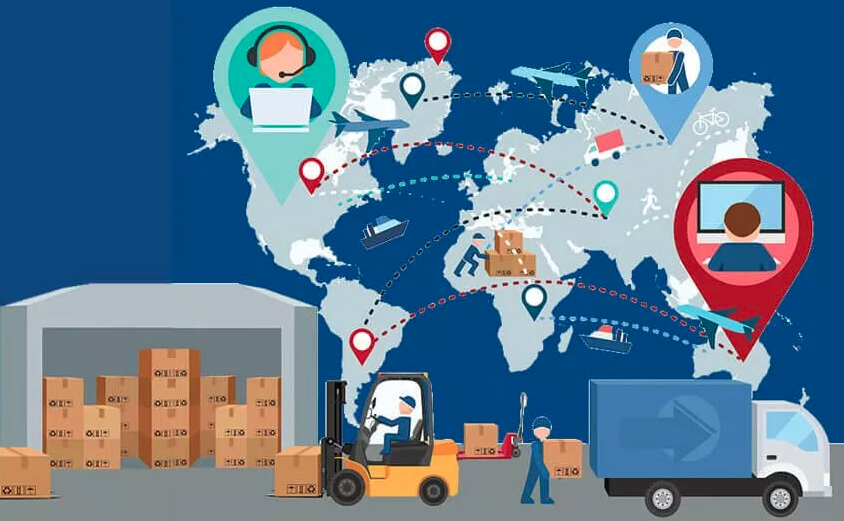
“Comprehensive” is one of those words that gets attached to things until it stops meaning anything at all. Comprehensive coverage. Comprehensive solutions. Comprehensive support. At some point the word becomes wallpaper — present everywhere, noticed by nobody.
In product sourcing, though, the difference between a comprehensive service and one that merely claims to be is not semantic. It’s the difference between a supply chain that functions and one that functions until it doesn’t, at which point you discover which parts were never actually being managed.
This is worth unpacking carefully. Not because it’s complicated, but because the sourcing industry has a habit of presenting partial services as complete ones, and buyers often don’t discover the gaps until they’re already expensive.
The Sourcing Process Is Longer Than Most Buyers Think
One of the persistent misunderstandings about product sourcing is where it starts and where it ends. Many buyers, especially those early in their sourcing journey, implicitly think of sourcing as the supplier-finding phase — the research, the outreach, the quotes. Once a factory is selected and a purchase order is raised, the thinking goes, sourcing is done and operations takes over.
In practice, the boundary doesn’t work that way. A supplier relationship that isn’t actively managed tends to drift. Quality standards that were established at sampling get loosely interpreted during high-volume production runs. Lead times that were agreed upon in writing get quietly extended when the factory has a more valuable customer to prioritize. Compliance documentation that was current at the start of a relationship goes out of date without anyone flagging it.
These are not hypothetical risks — they’re the normal physics of unmanaged supplier relationships. Which means a sourcing service that stops at supplier identification has handed you a relationship that will immediately start requiring management you may not be equipped to provide.
Comprehensive product sourcing services cover the full arc: identifying and vetting suppliers, yes, but also managing the production relationship, monitoring quality through the manufacturing process, coordinating logistics, and staying close enough to what’s happening on the factory floor to catch problems while they’re still small.
Supplier Identification Is the Beginning, Not the Work
Finding suppliers is genuinely the easiest part. Online directories, trade shows, industry referrals, regional manufacturing clusters — there are more ways to find a list of factories producing your product category than there have ever been. The hard part is never the list.
What requires real expertise is qualification. A supplier who can make your product is not the same as a supplier who can make it consistently, at your required volume, to your quality standard, within your timeline, while meeting your compliance requirements, at a price that works for your business model. Narrowing from “can make it” to “right for us” requires investigation, reference checks, factory audits, and often a trial production run that reveals things a factory visit and a Zoom call never would.
This is where many partial services quietly step back. The referral is made, the introduction is complete, and what happens next is your problem. Comprehensive product sourcing services stay in the process through qualification, through sampling, and through the first production run — because that’s when the relationship is most fragile and the risk of an expensive mistake is highest.
Quality Management Is a Process, Not an Inspection
The word “quality control” gets used in sourcing to describe anything from a dedicated team running inline inspections throughout production to a third-party inspector showing up for four hours on the last day before shipment. These are not equivalent, and presenting them as if they were is one of the more consequential misrepresentations in the industry.
End-of-line inspection is better than nothing. If a factory has produced something completely wrong — wrong color, wrong dimensions, obviously defective — a final random inspection will catch it. What it won’t catch is the process issue that produced a 12% defect rate on units that mostly look fine. It won’t catch the material substitution that happened in week two of a six-week run because the original material went up in price. It won’t catch the gradual calibration drift on a machine that produced acceptable goods for three weeks and then didn’t.
Genuine quality management is embedded through the production process. It checks materials at intake. It monitors production inline. It reviews samples at key milestones. And critically, it has a clear escalation path — when something is wrong, who decides what, and how fast.
When evaluating comprehensive product sourcing services, the quality question to ask isn’t “do you do quality control?” Everyone says yes. The question is when their people are on the floor, what specifically they’re checking, and what happens to a production run when something fails. Vague answers to the last question usually mean accountability sits with you, not them.
The Logistics Piece Is Underrated Until It Goes Wrong
Sourcing a great product from a great supplier and then having it stuck at port, delayed by paperwork, or delivered to the wrong distribution center is not a supply chain success story. And yet logistics coordination is frequently the piece that gets treated as someone else’s job in otherwise capable sourcing operations.
This matters more than it used to. Trade regulations have become more complex. Documentation requirements vary by destination market, product category, and specific material inputs. Tariff classifications that were settled years ago are getting revisited. A sourcing partner who treats logistics as the freight forwarder’s problem alone is leaving a significant risk exposure unmanaged.
Comprehensive product sourcing services include logistics coordination — not necessarily operating the freight forwarding themselves, but actively managing the documentation, the booking, the incoterms negotiation, and the customs compliance that gets goods from factory to destination without unwanted surprises. This is detailed, unglamorous work. It’s also the part that, when it fails, makes everything else irrelevant.
Product Development Support: The Capability Most Buyers Don’t Know to Ask For
There’s a version of comprehensive product sourcing services that extends upstream into product development — and for brands that are designing or co-developing products rather than buying off-shelf, this capability can be genuinely transformative.
Developing a product without supply chain input is how you end up with specifications that are beautiful on paper and difficult or expensive to manufacture at scale. A sourcing partner with strong product development capability will push back on a design that requires a process few factories can execute, suggest a material substitution that cuts cost without affecting performance, or identify that a minor dimensional change makes the product significantly easier to pack and therefore cheaper to ship.
This kind of input isn’t always wanted — some designers reasonably feel that manufacturability constraints shouldn’t drive creative decisions. But for product categories where cost, lead time, and scalability matter, building supply chain knowledge into the development process produces better commercial outcomes than retrofitting it afterward.
Not every comprehensive sourcing service offers this. The ones that do tend to attract clients who are developing products rather than just buying them, and the relationships tend to go deeper and last longer as a result.
Communication and Reporting: The Invisible Infrastructure
There’s an aspect of comprehensive product sourcing services that doesn’t show up in capability lists but has an enormous effect on how well the whole thing works in practice: how information flows between the sourcing partner and the client.
A sourcing operation can be doing excellent work on the ground — managing suppliers carefully, catching quality issues early, keeping logistics on track — and still fail the client if that work isn’t being communicated clearly and consistently. Buyers need to know where their orders are. They need to know when something has changed. They need to receive bad news quickly enough to make decisions, not after the window for action has closed.
Proactive communication is a discipline. It requires building reporting structures, maintaining them even when everything is going smoothly, and developing the habit of flagging problems before they’re crises rather than explaining them afterward. Some sourcing partners do this well. Many don’t. The difference shows up not in whether problems occur — they always do — but in whether you found out in time to do something about it.
Why Partial Services Create Full-Sized Problems
The case for genuinely comprehensive product sourcing services isn’t abstract. It comes from the concrete reality that supply chains are systems, and systems have weak points at their junctions — the places where one party’s responsibility ends and another’s begins.
A sourcing service that identifies great suppliers but doesn’t manage production quality creates a junction at the factory gate. A service that manages quality but steps back from logistics creates a junction at the loading dock. A service that handles everything to the port but leaves documentation to chance creates a junction at customs.
Each of those junctions is a place where things fall through. Experienced buyers have paid for that lesson at least once. The ones who haven’t yet usually learn it on a high-volume order during a peak season, which is the most expensive possible classroom.
Comprehensive doesn’t mean perfect. It means the coverage is real, the accountability is clear, and the gaps that usually cause problems are actually being managed. That’s not a marketing claim — it’s a structural property of the service, and it’s worth verifying carefully before you commit.