
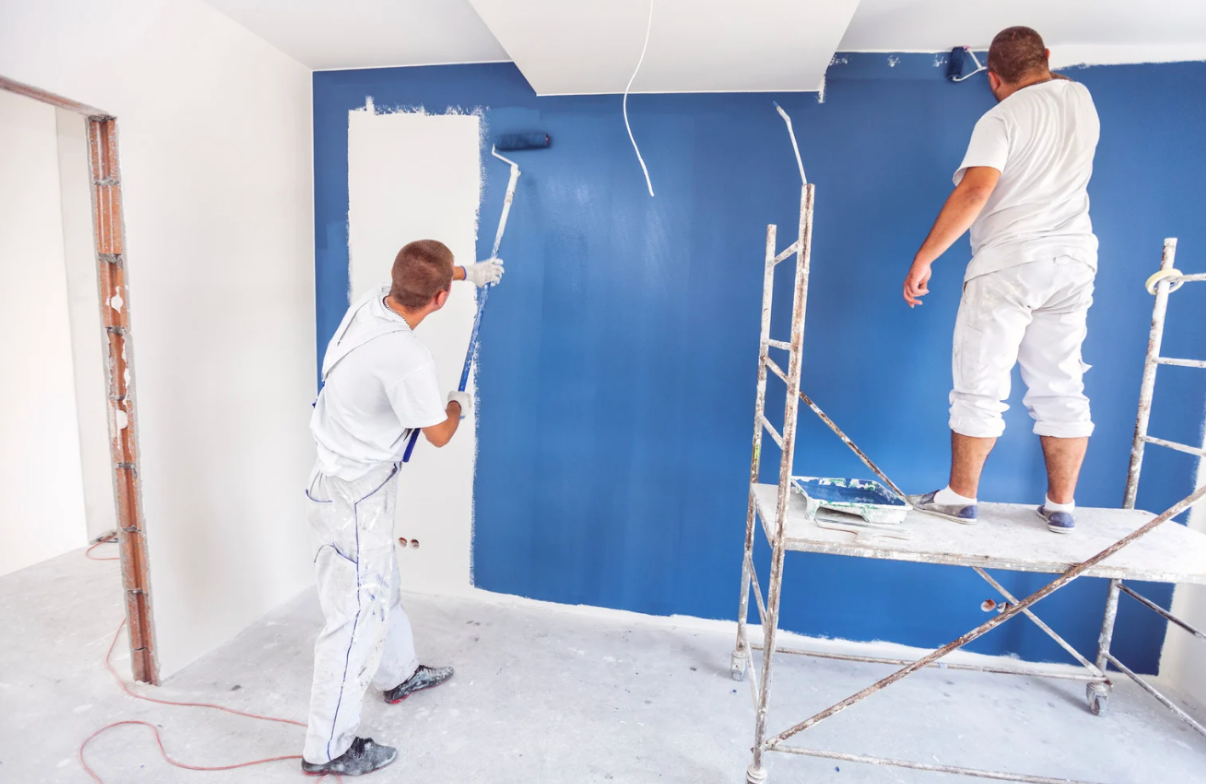
Interior painting changes how a home feels faster than almost any other update. It affects light, room size perception, and how clean or dated a space looks. It is also one of the more cost-effective home projects.
According to the National Association of Realtors, interior paint remains one of the home improvements owners choose most because it improves daily living and supports resale appeal without major construction costs.
But paint that looks good on day one is not the goal. Paint needs to hold up. That depends on surface prep, product choice, and how it is applied. Walls need cleaning. Cracks need repair. Gloss levels need to match room use. Kitchens, baths, and high-traffic areas all place different demands on paint.
Color choice matters too. Light tones reflect more light. Dark colors can make walls stand out or make a room feel smaller. Finish also changes how paint performs. Flat paint hides flaws. Satin cleans easier. Semi-gloss handles moisture better.
Across the metro area, Residential Painting Denver CO projects often focus on more than color. Homeowners want finishes that wear well, surfaces that stay clean, and results that still look sharp years later. Distinct Painting Company serves residential clients throughout Denver. This guide covers how to choose colors, hire well, and get results that last.
Choosing Interior Paint Colors: A Framework That Actually Works
Color selection is where most homeowners spend the most time and feel the most uncertain. A practical framework makes the decision easier.
Start with fixed elements
The fixed elements of your space are everything that will not change: flooring, countertops, cabinetry, furniture you plan to keep, and major fixtures. Your wall color needs to harmonize with those items, not compete with them. Pull a sample of your floor material or photograph it in natural light before choosing any paint.
Use the 60-30-10 rule
In any room: 60% of the visual space should be the dominant color (typically the walls), 30% a secondary color (major furniture, area rug), and 10% an accent (throw pillows, artwork, accessories). This proportion creates visual balance without feeling flat.
Test samples at real scale
Paint chips are almost useless for color decisions. A 2×3 chip looks completely different from a full wall. Purchase sample sizes (usually $5 to $10 per color) and apply them in 12×12 patches directly on the wall. Observe them at different times of day, both in natural light and under your existing lighting.
Understand undertones
Every white has an undertone: warm (cream, yellow, pink), cool (blue, green, gray), or neutral. A white that looks beautiful in the paint store can look green or pink on your walls, depending on the light and the other colors in the room. Testing on your actual wall is the only way to see this accurately.
Consider the flow between rooms
Homes with open floor plans or sightlines between rooms benefit from a cohesive color story. Colors do not need to match, but they should belong to the same family (all warm or all cool, consistent in saturation). Abrupt tonal jumps between adjacent rooms often feel unresolved.
Understanding Paint Grades and Why Quality Matters
Paint is priced across a wide range, and the price difference is not just marketing. It reflects real differences in what is in the can.
What makes premium paint different:
- Pigment load: Higher-quality paints contain more pigment per gallon. This means better coverage, truer color, and fewer coats needed to achieve hide.
- Resin quality: Resin is the binder that holds pigment to the surface and determines washability and durability. 100% acrylic resin outperforms vinyl-acrylic blends.
- Solids content: The percentage of solid material (pigment plus binder) that remains after the solvent evaporates. Higher solids content means a thicker dried film and better durability.
Practical comparison:
| Grade | Cost per gallon | Coats typically needed | Scrub resistance |
| Budget/contractor | $15 to $30 | 2 to 3 | Low |
| Mid-range | $35 to $55 | 2 | Moderate |
| Premium (Sherwin-Williams Emerald, Benjamin Moore Aura) | $70 to $100+ | 1 to 2 | High |
For living areas and bedrooms, mid-range paint is often sufficient. For kitchens, bathrooms, hallways, and trim, the upgrade to premium is almost always worth it because washability and durability are used daily.
Sheen: The Decision That Affects How the Room Looks and Functions
Sheen level is the most underestimated decision in interior painting. The wrong sheen for a surface creates problems that no amount of good color selection fixes.
Flat/matte: No light reflection. Hides surface imperfections and roller texture well. Difficult to wash. Best on ceilings and formal rooms with low traffic.
Eggshell: Subtle sheen. Slightly washable. The workhorse finish for most bedroom and living area walls. Hides moderate imperfections.
Satin: Visible sheen. Significantly more washable. Good for family rooms, kids’ rooms, and hallways where handprints happen.
Semi-gloss: High sheen. Highly washable and moisture-resistant. Standard for trim, doors, and kitchen/bathroom walls. Magnifies surface imperfections.
Gloss: Maximum sheen. Maximum durability. Used on furniture, cabinetry, and statement trim details. Reveals every imperfection in the surface beneath.
The general rule: use a higher sheen where you need more washability and a lower sheen where you want to hide imperfections.
Prep Work for Interior Painting: What Gets Skipped and Why It Matters
Cleaning the surfaces
Grease and cooking residue on kitchen walls prevent paint adhesion. Dust on ceilings causes paint to roller off unevenly. Walls in high-traffic areas accumulate invisible hand oil that causes new paint to repel rather than bond. A basic cleaning with a TSP substitute or degreaser before painting is not optional for rooms that have seen real use.
Filling and sanding
Every nail hole, dent, crack, and imperfection should be filled with lightweight spackling or joint compound and sanded smooth before painting. These are visible through any paint finish, and the higher the sheen, the more visible they become. Running a bright work light across the wall surface after filling reveals any spots you missed.
Taping
Professional painters cut in at edges by hand with a brush rather than using tape on most surfaces. Tape is used for crisp lines at specific transitions. Tape left on too long, or removed before the paint is fully dry or after it has cured too hard, pulls the new paint with it. If you are using tape, pull it off while the paint is still slightly tacky.
Protecting floors and fixtures
Drop cloths on floors and plastic on fixtures are non-negotiable. Paint spatters dry in minutes and are difficult to remove from hard surfaces and impossible to remove cleanly from carpet.
What Interior Painting Costs in Denver
Denver residential painting costs vary by room size, ceiling height, prep required, and paint grade specified.
Rough ranges for professionally painted interiors:
| Room type | Average professional cost |
| Single bedroom (approx. 200 sq ft) | $300 to $700 |
| Living room or great room | $500 to $1,200 |
| Full interior (average 3-bedroom home) | $3,000 to $8,000 |
| Trim and doors only (full home) | $800 to $2,500 |
| Kitchen (walls only) | $400 to $900 |
These ranges reflect professional labor and mid-grade to premium paint. DIY material-only costs are roughly $150 to $400 per room, depending on size and the number of coats required.
The biggest variable in professional pricing is the condition of the walls. A room that needs significant patching, skim coating over textured surfaces, or multiple coats of primer because of a major color change will cost more than a room that needs only light prep.
Getting Accurate Quotes
For any interior painting project beyond a single room, written quotes allow accurate comparison.
When collecting quotes, provide:
- The rooms included, with dimensions or square footage
- Whether ceilings are included
- Whether trim and doors are included
- The paint colors you have selected or the color change you are making (dark to light changes require more materials)
- Any specific prep needs you already know about
A painting company that quotes without walking the space is estimating blind. An accurate quote requires seeing the surfaces, assessing their condition, and understanding what preparation is needed. An in-person walkthrough is worth scheduling before any work is committed to.