
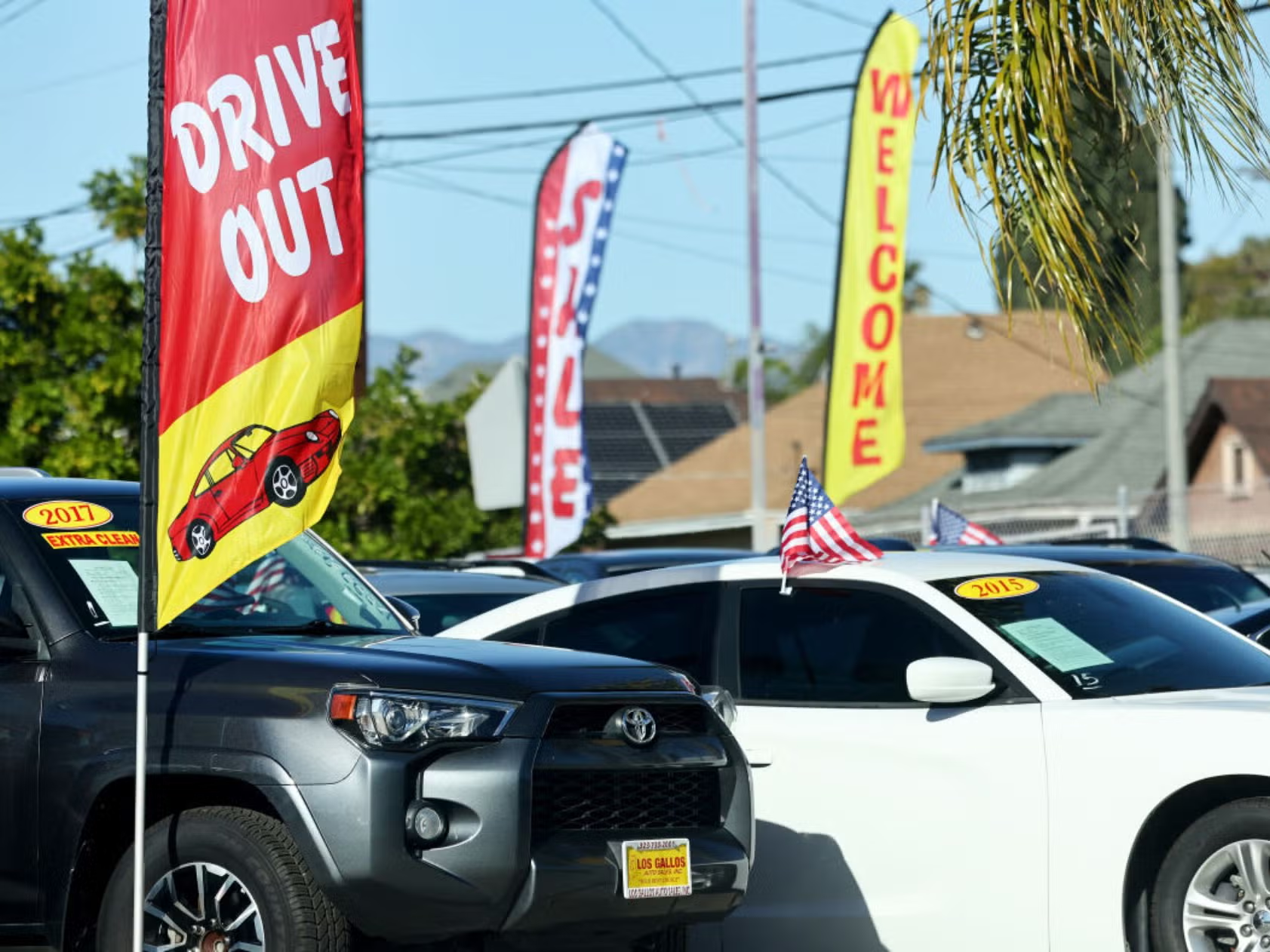
Buying a used car twenty years ago involved a particular kind of Saturday. You drove between dealerships, walked around forecourts, had conversations with salespeople who knew more than you did about the cars on the lot, and made decisions under pressure with incomplete information. Private sales meant scanning classified ads in a newspaper or on a printed sheet in a newsagent window, then calling a landline number to arrange a viewing, and then driving to a stranger’s house based on a brief description and one or two photographs if you were lucky.
The information environment for buying used cars for sale has changed so completely that it’s worth pausing to appreciate how different the experience is, and also to understand what the changes mean in practice for buyers who know how to use them.
Information Abundance and What to Do With It
The most obvious shift is in the sheer volume of used cars for sale that any buyer can now access before leaving their home. A buyer in Manchester who previously had access to the local dealer stock, whatever was in the local classifieds, and whatever friends and family happened to know about can now search an inventory that includes sellers from across the country, compare dozens of examples of the same model, and understand the market pricing for a specific combination of year, mileage, specification, and condition before making any contact.
This abundance changes the power dynamic in the transaction. The dealer who knew more than the buyer about what a specific car was worth in a specific condition, and could rely on that information asymmetry when negotiating, now faces buyers who have done market research before arriving. A buyer who has looked at forty examples of the same car and knows that the asking price is 12% above median market value for the mileage walks into a viewing differently than one who hasn’t.
The practical benefit is that confidence in what you should pay is now accessible to everyone, not just people with industry contacts or specialist knowledge. You don’t need to know a mechanic who knows a dealer who can tell you what a fair price looks like. You need to spend an hour on an aggregator and look at enough listings to understand the distribution.
What the Photography Revolution Means for Buyers
The shift from one or two grainy photographs to multi-image listings with detailed interior shots, boot space, engine bay, and sometimes 360-degree views has changed what can be assessed before a viewing.
A buyer looking at used cars for sale on a well-photographed listing can identify obvious cosmetic issues, assess interior condition, check visible service history documentation, and often spot inconsistencies in mileage claims before any communication with the seller. A dashboard photo that shows worn seat bolsters and rubbed pedal rubber on a car claimed to have covered 40,000 miles in eight years is immediately informative.
The limitation of photography as an assessment tool is equally worth understanding. Good photography, particularly with the wide-angle lenses most smartphones use, can make small spaces look larger, can smooth out panel gaps, and can make paint conditions look better than they are. A seller who has taken careful photographs in good lighting has already optimised the presentation of the car. What those photographs don’t show is as important as what they do.
Video listings, which some sellers now include, add something that photography can’t: the engine running, the exhaust note, the sound of doors closing, and sometimes a walkaround that reveals gaps and panel conditions that carefully selected photos would omit.
History Checks: What Online Access Made Routine
The ability to run a vehicle history check online before viewing any used car has become one of the most significant practical changes in used car buying, and it’s now cheap enough and quick enough that there’s no rational reason not to do it.
Outstanding finance, previous write-off status, mileage discrepancies across MOT records, stolen vehicle flags, and SORN history are all accessible within minutes for a modest fee. These checks surface problems that are entirely invisible at a physical inspection. A car with outstanding finance looks identical to one without it. A category C write-off that has been well repaired looks similar to an equivalent car that was never damaged.
The MOT history database, accessible for free through government services in the UK, has become an important research tool independent of paid vehicle checks. The advisories from previous MOTs reveal the maintenance history and recurring issues of a vehicle across its life with a specificity that the seller’s description rarely provides. A pattern of recurring brake advisory notices, suspension advisories that were never actioned, or emissions issues that appeared and reappeared tells a story about how a car was maintained.
Fraud and the Risks That Come With Online Markets
Expanded access to used cars for sale online has made buying easier and also introduced categories of fraud that didn’t exist in local classified markets.
Cloned vehicles, where a stolen car is given the identity, including registration plates and paperwork, of a legitimate car of the same make, model, and colour, have become more sophisticated as online listings have become the primary channel. Remote transactions, where a buyer sends a deposit or full payment before viewing the car, are a vector for advance fee fraud that didn’t exist when all transactions happened face-to-face.
The standard practical protections are straightforward: never pay before seeing the car in person, always verify the car’s identity against the documentation at viewing, and be appropriately cautious about sellers who resist viewing, push for quick decisions, or request payment by bank transfer rather than traceable methods.
The volume of listings that online access provides also generates a noise problem. Not all listings are genuine, not all prices are realistic, and not all sellers are honest. The abundance of information that makes the market more efficient for informed buyers also creates more surface area for the fraud and misrepresentation that some sellers attempt.
The In-Person Viewing Remains Non-Negotiable
Everything that online access has changed about shopping for used cars for sale, the research, the pricing, the history checks, the comparison shopping, happens before the viewing. None of it replaces it.
The physical inspection of a car, ideally including a test drive and ideally with a mechanical inspection from an independent professional for any purchase above a certain value, remains the only way to assess what the listing doesn’t show. Paint conditions, panel gaps, mechanical sounds, the way the car drives, the smell of the interior: these are not assessable from photographs.
The buyer who has done thorough online research and then conducts a thorough physical inspection is in the strongest possible position. They know whether the price is fair before they arrive, they know the car’s history before they open the door, and they’re looking at the car with the context that makes the physical inspection meaningful rather than overwhelming.
Online listings changed the preparation. They didn’t change what preparation is for.