
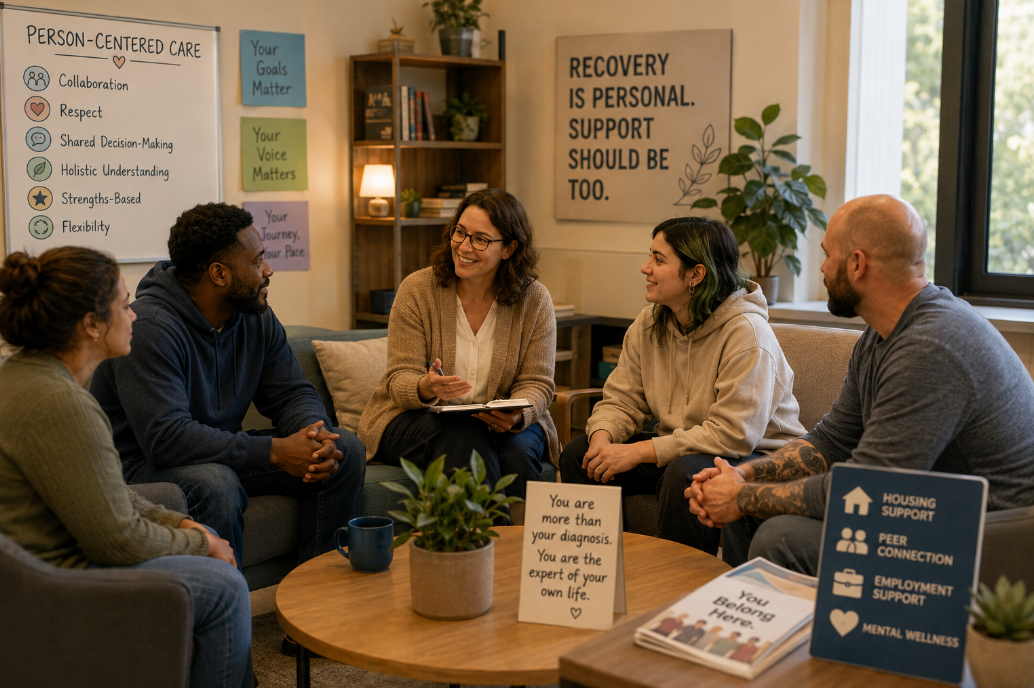
In recent years, the conversation around substance use and mental health care has been undergoing a meaningful transformation. For decades, treatment approaches were often built around rigid systems, standardized protocols, and a one-size-fits-all mindset. While these models provided structure, they frequently overlooked an essential truth: every individual’s experience with mental health challenges or substance use is deeply personal.
Today, there is a growing shift toward person-centered care—a model that places the individual at the heart of every decision, every treatment plan, and every support system. This approach is not just a trend; it reflects a broader cultural and clinical understanding that recovery is most effective when it respects identity, context, and personal goals.
Understanding Person-Centered Care
Person-centered care is built on a simple but powerful idea: people are more than their diagnoses.
Rather than focusing solely on symptoms or labels, this approach considers the whole person—life experiences, cultural background, emotional needs, strengths, and even aspirations beyond recovery. In substance use and mental health services, this means treatment is no longer just about managing conditions. It becomes about helping individuals rebuild their lives in ways that feel meaningful and sustainable to them.
At its core, person-centered care emphasizes:
- Collaboration between individuals and care providers
- Respect for personal values and preferences
- Shared decision-making in treatment planning
- Flexibility in care approaches
- Recognition of social, emotional, and environmental influences
This model shifts the dynamic from “provider-led” to “partnership-based,” giving individuals a stronger voice in their own recovery journey.
Why the Shift Is Happening Now
The movement toward person-centered care did not happen overnight. It has been shaped by years of research, lived experience, and evolving attitudes toward mental health and addiction.
One key driver is the growing recognition that traditional treatment models often failed to account for relapse cycles, co-occurring conditions, or the social realities people face outside clinical settings. Many individuals felt unheard or misunderstood within systems that prioritized compliance over connection.
Another factor is the increasing awareness of trauma. Studies have shown that a significant portion of people seeking care for substance use or mental health concerns have experienced trauma in their lives. As a result, care models that emphasize empathy, safety, and trust are now considered essential rather than optional.
Additionally, communities and advocates have pushed for more dignity-centered care—care that treats individuals not as cases to be managed, but as people with agency and resilience.
In regions exploring more adaptable systems, such as those discussing frameworks like Drug Treatment in MA, the conversation increasingly highlights how treatment outcomes improve when individuals feel genuinely involved in their care.
The Core Principles Driving Person-Centered Care
1. Individualized Treatment Planning
No two recovery journeys are the same. Person-centered care recognizes this by tailoring treatment plans to each individual’s needs, preferences, and circumstances. This might include adjusting therapy styles, pacing of care, or integrating personal goals like employment or family rebuilding.
2. Empowerment and Shared Decision-Making
Instead of having decisions made for them, individuals are encouraged to actively participate in shaping their recovery path. This shared responsibility builds trust and often increases long-term engagement in care.
3. Holistic Understanding of Health
Mental health and substance use are influenced by many factors—housing stability, relationships, stress levels, physical health, and more. A person-centered model considers all of these interconnected aspects rather than isolating symptoms.
4. Strength-Based Focus
Rather than concentrating solely on challenges, this approach highlights personal strengths. Even in difficult circumstances, individuals often have resilience, coping skills, and support systems that can be built upon.
5. Continuous Adaptation
Recovery is not linear. Needs change over time, and care must adapt accordingly. Flexibility is a key feature of person-centered systems.
The Human Impact of This Approach
One of the most important outcomes of person-centered care is improved engagement. When individuals feel heard and respected, they are more likely to stay involved in their care process. This sense of partnership can significantly influence recovery outcomes.
It also reduces stigma. Traditional approaches sometimes unintentionally reinforce the idea that individuals must “fit” into treatment expectations. Person-centered care shifts that perspective, emphasizing that systems should adapt to people—not the other way around.
Another meaningful impact is emotional safety. Many individuals entering care systems carry fear, shame, or mistrust. A supportive, individualized approach helps rebuild confidence and encourages openness, which is essential for effective healing.
Challenges in Implementation
While the benefits are widely recognized, implementing person-centered care is not without challenges.
System Constraints
Healthcare systems often operate under time, staffing, and funding limitations. Personalized care requires more time and coordination, which can strain existing resources.
Training and Mindset Shifts
Providers must move beyond traditional hierarchical models. This requires ongoing training and a willingness to embrace collaboration rather than control.
Balancing Structure and Flexibility
While personalization is important, systems still need structure to ensure safety and consistency. Finding the right balance can be complex.
Addressing Social Barriers
Factors such as housing instability, unemployment, and limited access to support services can make individualized care more difficult to sustain.
Despite these challenges, many systems continue to evolve toward more flexible, human-centered frameworks because of their long-term benefits.
The Role of Community and Support Systems
Person-centered care extends beyond clinical settings. Recovery is deeply influenced by community environments, including family support, peer networks, and local resources.
Support systems that encourage dignity, inclusion, and understanding can significantly enhance recovery outcomes. Peer-led groups, community outreach, and family involvement all play important roles in reinforcing the principles of individualized care.
In many discussions around Drug Treatment in MA, there is increasing recognition that sustainable recovery depends not just on treatment itself, but on the broader ecosystem of support surrounding the individual.
Technology and the Future of Care
Technology is also shaping the evolution of person-centered care. Telehealth services, digital therapy tools, and mobile support platforms are making care more accessible and flexible. These tools allow individuals to engage with support systems in ways that fit their daily lives, rather than being restricted by location or scheduling barriers.
Data-driven insights are also helping providers better understand individual progress and adjust care plans more effectively. However, even as technology expands, the human element remains central. Technology is a tool—not a replacement—for empathy, connection, and understanding.
Moving Toward a More Human System of Care
The shift toward person-centered care represents more than just a change in treatment models—it reflects a broader rethinking of what recovery means.
Recovery is no longer viewed as a fixed destination defined by symptom reduction alone. Instead, it is understood as a personal journey shaped by identity, purpose, relationships, and well-being.
This evolution challenges systems to listen more deeply, respond more flexibly, and treat individuals as active participants in their own healing process.
Conclusion
Person-centered care is reshaping how substance use and mental health services are understood and delivered. By prioritizing individuality, collaboration, and respect, it creates space for more meaningful and sustainable recovery experiences.
While challenges remain in fully integrating this approach into all systems, its direction is clear: care must adapt to people, not the other way around.
As awareness continues to grow—particularly in discussions surrounding frameworks like Drug Treatment in MA—the focus is steadily moving toward more compassionate, flexible, and human-centered support systems. This shift is not just improving outcomes; it is redefining what it means to truly care for someone in recovery.