
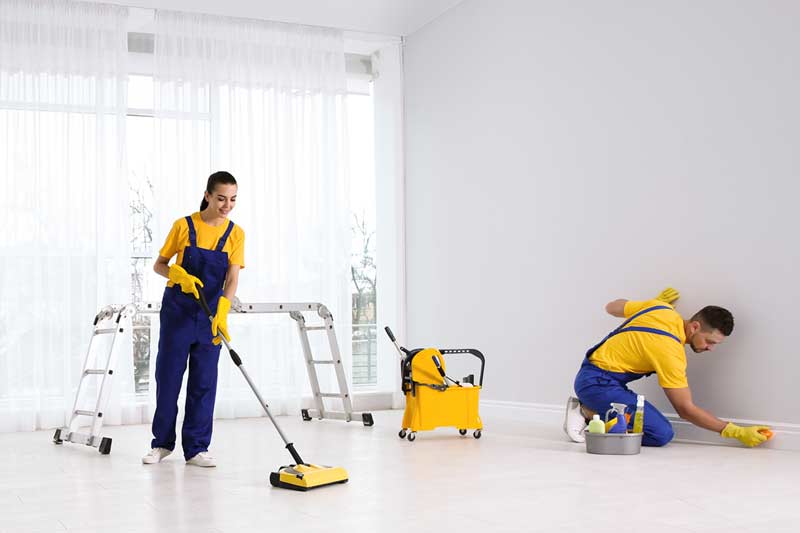
It’s one of those operational decisions that sounds simple until you actually start thinking about it. Do you bring cleaning in-house and manage it yourself, or do you hand it to professionals and get on with running your business? Both options have genuine advocates. Both have genuine drawbacks. And the right answer, frustratingly, depends almost entirely on your specific circumstances — which makes the debate considerably more interesting than a simple winner-takes-all verdict.
What follows isn’t a declaration that one approach always beats the other. It’s an honest look at what each option actually involves, where each one tends to shine, and where each tends to quietly fall apart when the rubber meets the floor.
The Case for Bringing Cleaning In-House
There’s a version of the in-house argument that makes intuitive sense. You hire your own cleaner or small team, you control the schedule, you give direct instructions, and you have someone on-site who knows the building, knows the quirks, and can be directed to wherever the problem is today. No contract negotiations. No account managers. No wondering whether the person who cleaned your office last week will be the same one who turns up next week.
For very small businesses — a single office, a compact retail unit, a premises with modest and straightforward cleaning needs — this arrangement can work well. The requirements are simple, the oversight is manageable, and the relationship is direct. When you need something done, you ask. That simplicity has real value.
There’s also a case to be made for continuity. A long-term in-house cleaner who knows your building intimately — where the awkward corners are, which surfaces need careful handling, what the priorities are on a Monday versus a Friday — develops a kind of institutional knowledge that a rotating roster of external operatives might not replicate quite as naturally.
Where In-House Arrangements Start to Strain
The complications tend to emerge as the business grows, or as the cleaning requirements become more complex. The most immediate pressure point is cover. When your in-house cleaner is on holiday, or calls in sick, or hands in notice with two weeks to go, the problem lands directly on you. You are now the person finding a replacement, managing the recruitment process, or doing the cleaning yourself while you figure it out. None of these are how you planned to spend your Tuesday.
Staff management at any level carries costs and obligations that are easy to underestimate. Holiday pay, sick pay, PRSI, pension contributions, training, equipment, supplies — the actual cost of employing someone for cleaning is consistently higher than the hourly rate suggests. Add in the management time required to oversee the arrangement, address complaints, and handle HR matters when they arise, and the picture changes considerably from the straightforward simplicity it promised at the outset.
There’s also the question of capability. An in-house cleaner, however diligent, is generally not equipped to handle specialist deep cleaning, high-level work, post-construction cleaning, or the specific protocols required in regulated environments. Every time a requirement falls outside the ordinary, it becomes an additional problem to solve.
The Case for Professional Commercial Cleaning
The argument for outsourcing isn’t simply that professionals are better at cleaning, though trained operatives with commercial-grade equipment working to established systems do tend to produce consistently high results. The argument is broader than that. It’s about what outsourcing removes from your plate as well as what it adds.
When you work with a professional provider, the management burden transfers. Rota management, absence cover, training, equipment maintenance, product sourcing, quality supervision — these all become the contractor’s responsibility rather than yours. The cleaning gets done to a consistent standard, and the organisational complexity of making that happen sits with people whose entire business model is built around solving exactly that problem.
Commercial cleaning services CleanbeeCommercial brings this professional infrastructure to businesses of all sizes, providing the kind of systematic, accountable approach to workplace cleaning that in-house arrangements struggle to replicate at scale. The difference isn’t just in the cleaning itself — it’s in the reliability of the systems behind it.
Professional providers also carry their own insurance and liability coverage, which removes a risk that in-house arrangements leave squarely with the employer. If a cleaning operative is injured on your premises, or damages something in the course of their work, the liability sits with the cleaning company rather than with you. That’s not something most people think about until they have reason to, at which point they think about it quite a lot.
Flexibility is another meaningful advantage. Business needs change — premises expand, sites close, requirements shift, renovation projects create one-off intensive cleaning needs. With an outsourced contract, adjusting the scope of service is a conversation. With an in-house team, the same adjustment is an HR process.
The Quality Consistency Question
One of the most common frustrations with cleaning arrangements of any kind is inconsistency — the clean that’s excellent one week and perfunctory the next, depending on who’s working, how tired they are, or how the day is going. This isn’t unique to either model, but professional cleaning companies have more structural tools to address it. Checklists, supervisory checks, client feedback loops, and quality management systems all exist precisely to ensure that the standard delivered on day one is the standard delivered on day three hundred.
An individual in-house cleaner operates largely without this infrastructure. The quality you get tends to reflect the individual’s own standards and habits, which vary more than any structured system would. That’s not a criticism of individuals — it’s simply the reality of how systems versus individuals operate over time.
The Regulated Environment Factor
In certain sectors, this debate has an answer built into the requirements. Healthcare settings, food production facilities, childcare premises, pharmaceutical environments, and a range of other regulated workplaces operate under specific hygiene and documentation standards that have genuine legal weight. The cleaning in these environments needs to be done in particular ways, using particular products, with particular records kept to demonstrate compliance.
Most in-house arrangements are simply not equipped to navigate this at the required level. The knowledge, the products, the systems, and the documentation all need to be in place — and building that capability internally requires investment that typically matches or exceeds the cost of working with a professional provider that already has it.
For businesses operating in regulated sectors, the case for professional cleaning is not primarily about convenience or cost. It’s about being able to meet the obligations that the operating environment requires.
Cost: The Comparison People Forget to Do Properly
The cost comparison between in-house and outsourced cleaning is one that businesses often get wrong, not because the arithmetic is difficult but because they don’t include all the relevant numbers. The in-house hourly rate looks appealing. The full employment cost — inclusive of all employer contributions, equipment, supplies, training, and management time — looks considerably less so.
A genuine like-for-like comparison needs to account for what the outsourced contract actually covers versus what the in-house arrangement would need to replicate. Equipment replacement, consumables, specialist cleaning tasks that arise periodically, absence cover, supervision, quality checking — all of these are included in a professional contract and need to be either costed into the in-house model or accepted as gaps in what the in-house model provides.
When the comparison is done honestly, outsourcing is frequently competitive on cost and often cheaper. When it isn’t, the additional cost tends to reflect genuine additional value — in flexibility, capability, accountability, or risk management — rather than simply a premium for the same thing.
So Which Actually Wins?
A small business with a single premises, modest cleaning requirements, and the management bandwidth to handle the occasional staffing challenge can make an in-house arrangement work perfectly well. There’s no reason to outsource for the sake of it if the simpler model genuinely meets the need.
But for most businesses of any size — and certainly for any business with multiple sites, regulated requirements, complex premises, or simply limited appetite for adding cleaning management to an already full operational plate — professional cleaning is the more rational choice. Not because it’s fashionable, and not because in-house cleaning can’t work, but because the professional model is built to deliver consistent results at scale with a level of accountability and flexibility that in-house arrangements structurally struggle to match.
The question isn’t really which model sounds better in the abstract. It’s which one actually serves your business, your premises, and your people — and being honest about that question tends to lead most businesses to the same answer.
Clean premises don’t happen by accident. They happen because someone has taken the time to put the right structures in place. The only real question is whose job it is to do that — and whether they’re equipped to do it well.