
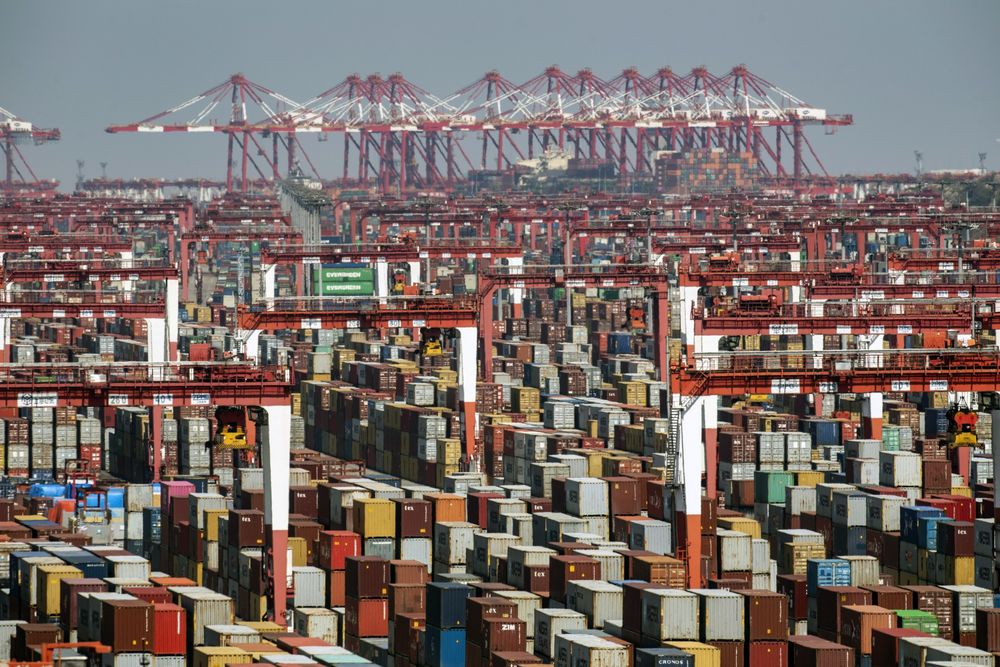
The pandemic didn’t break China supply chain management so much as it stress-tested assumptions that had been accumulating for two decades. The assumption that just-in-time inventory was an optimisation rather than a risk. The assumption that geographic concentration in manufacturing was acceptable as long as it was cheap. The assumption that supply chains built for efficiency would hold up under conditions designed to test resilience. Most of those assumptions failed, not catastrophically in every case, but visibly enough that the companies relying on them started asking different questions.
What’s happened since is more complicated than the “decoupling from China” narrative that dominated business media for a while suggests. China remains the world’s largest manufacturing economy by a significant margin. The supply chains running through it haven’t been dismantled; they’ve been rethought, diversified in some sectors, deepened in others, and in many cases made more sophisticated in how they’re managed. Understanding the actual state of China supply chain management in 2026 requires looking past the geopolitical framing and at what companies with serious manufacturing operations are actually doing.
What Actually Changed After 2020
The most significant operational change in China supply chain management coming out of the pandemic years wasn’t nearshoring or friend-shoring, though both of those have happened in specific sectors. It was inventory strategy.
The lean inventory model that dominated before 2020 assumed predictable lead times and reliable logistics. When both of those assumptions failed simultaneously, companies discovered they had essentially no buffer between a disruption in manufacturing and a disruption in their ability to supply customers. The response, across a wide range of industries, was a deliberate increase in inventory buffers and safety stock. This added cost and working capital requirements, but it also bought time when the next disruption arrived.
Alongside inventory strategy, visibility became a serious investment area. The companies that managed supply chain disruptions best during the pandemic were the ones who could see, in reasonable detail, where their stock was at any given moment and what their supplier’s suppliers were doing. Real-time tracking, supplier financial health monitoring, and multi-tier visibility tools went from nice-to-have to considered essential in a relatively short period. The investment in these capabilities has continued, and the technology supporting them has improved considerably.
Lead time management changed too. Building more time into production and delivery schedules, accepting that reliable slower is better than optimistic faster, became the dominant approach among buyers who’d been caught out by aggressive lead time assumptions. This is a cultural shift as much as an operational one, and it’s taken time to work through procurement organisations that had been rewarded for pushing lead times down.
The Diversification Reality
The narrative about companies moving manufacturing out of China deserves a more careful treatment than it usually gets, because the reality is sector-specific rather than uniform.
In electronics, particularly semiconductors and the complex assemblies that depend on them, diversification has been substantial. Government policy in the US, EU, Japan, and elsewhere has actively encouraged and subsidised domestic semiconductor manufacturing capacity, and the geopolitical risk calculation for concentrating advanced chip production in a single geography has changed. For the most advanced chips, the movement away from geographic concentration in East Asia is real and ongoing.
In consumer goods, apparel, and lower-complexity manufacturing, the picture is different. Some production has moved to Vietnam, Bangladesh, Mexico, and India, driven partly by cost factors as Chinese labour costs have risen and partly by genuine risk diversification. But the production that moved was often at the lower end of the complexity and value-added spectrum. The higher-complexity manufacturing, the production that requires sophisticated tooling, experienced workforces, and dense supplier ecosystems, has largely stayed in China, because the combination of factors that makes China capable of that kind of production doesn’t exist at comparable scale anywhere else yet.
The honest version of China supply chain management diversification in 2026 looks like this: most large multinationals with significant manufacturing exposure to China have added manufacturing capacity in other countries for specific product lines and risk scenarios, while maintaining and in some cases deepening their China operations for the work that China does best. The China plus one or China plus two model is probably more accurate than “decoupling” for describing what most companies have actually done.
Managing Supplier Relationships Differently
The most significant operational changes in China supply chain management haven’t been about geography. They’ve been about how buyer-supplier relationships are structured and managed.
The transactional model, where buyers optimised relentlessly on price and treated suppliers as interchangeable based on cost, took damage during the pandemic. Suppliers who had been squeezed on margin and had no loyalty to customers who’d never demonstrated any to them deprioritised those customers when capacity was tight. Companies that had invested in genuine supplier relationships, that had been consistent, fair, and communicative partners, found that their suppliers went the extra mile when things were difficult.
This observation has influenced how sophisticated buyers approach supplier relationship management in China. Longer-term agreements rather than spot purchasing. Price structures that allow suppliers a viable margin rather than extracting every cent. Investment in supplier development, particularly in quality systems and process improvement, rather than simply demanding quality without supporting the capability to deliver it. Regular face-to-face contact at the factory level rather than purely transactional interaction through trading companies.
None of this is new as an idea. The companies that were actually doing it before the pandemic were the ones with the most resilient supply chains during it. What’s changed is how many companies are now doing it deliberately rather than by accident.
The Role of Technology in Modern China Supply Chain Management
Technology has changed what’s possible in supply chain visibility and management in ways that were not available even five years ago.
Digital twin technology, which creates virtual models of physical supply chain operations, allows scenario planning that would previously have required either massive operational investment or guesswork. A company can model the impact of a specific factory going offline, or a port experiencing disruption, against current inventory positions and alternative sourcing scenarios, and arrive at contingency plans rather than reacting in real time to situations that could have been anticipated.
AI-assisted demand forecasting has improved significantly in accuracy, which matters for China supply chain management because the lead times involved mean that forecast accuracy at the time of ordering determines inventory outcomes weeks or months later. Getting the forecast wrong by ten percent when you’re carrying two weeks of safety stock is a different problem from getting it wrong by ten percent when you’re carrying twelve weeks of pipeline inventory.
Supplier monitoring platforms that track financial health indicators, production certifications, and compliance status in near-real-time have made it practical to maintain active awareness of supplier risk across large supply bases. The days when a buyer discovered that a key supplier had financial problems only when shipments stopped are not entirely over, but the tools to avoid that scenario are better than they’ve ever been.
The practical challenge with all of this technology is integration. Most large companies have supply chain technology that grew up across different acquisitions, regions, and business units, and the data doesn’t always talk to itself in useful ways. The technology investment that matters most isn’t any single platform; it’s the integration work that makes data from multiple sources usable for decision-making.
Geopolitical Risk as an Operational Variable
China supply chain management in 2026 cannot be fully discussed without acknowledging that geopolitical risk has become a genuine operational variable in a way it wasn’t a decade ago.
Tariff exposure is the most immediate and quantifiable dimension of this risk. Companies with significant manufacturing in China for products sold in the US market have had to make explicit decisions about how much tariff exposure they’re willing to carry, whether to absorb it, pass it on, or restructure operations to reduce it. Those decisions have different right answers depending on the product, the margin structure, and the competitive dynamics of the market.
Export controls on specific technologies and components have created compliance complexity that didn’t exist before. Products incorporating certain semiconductor components, manufactured in China, sold to certain end customers, cross multiple regulatory boundaries that require careful management. The compliance infrastructure required to navigate this has become a meaningful operational cost for companies in affected sectors.
Supply chain scenario planning that explicitly includes geopolitical scenarios, including the kind that felt too extreme to model seriously five years ago, is now standard practice at companies with material China exposure. The scenarios aren’t necessarily likely, but their potential impact is large enough that having thought through the response in advance is worth doing.
What Effective Management Looks Like Now
The companies managing China supply chains most effectively in the current environment share a few characteristics that weren’t universal before.
They have genuine visibility into their supply base beyond Tier 1, which means they know who their suppliers’ suppliers are and can assess risk at that level. They’ve invested in relationships rather than purely in price optimisation, and they’re seeing the returns in preferential treatment during capacity-constrained periods. They carry more inventory than they did before 2020, accept the cost of that, and treat it as risk management rather than inefficiency. They’ve integrated geopolitical scenario planning into supply chain strategy rather than treating it as a separate political analysis exercise.
And they have people in China. The supply chains that function best are managed by people who have real relationships with factories, who visit regularly, who understand the operational realities on the ground rather than managing remotely through intermediaries. Technology improves what’s possible in remote management, but it doesn’t replace the judgment that comes from being present.
China supply chain management has genuinely evolved since 2020, and the direction of that evolution is toward more sophistication, more resilience investment, and more active relationship management. The companies treating it as a commodity procurement function are behind the ones treating it as a strategic capability, and the gap between them is wider than it was.