
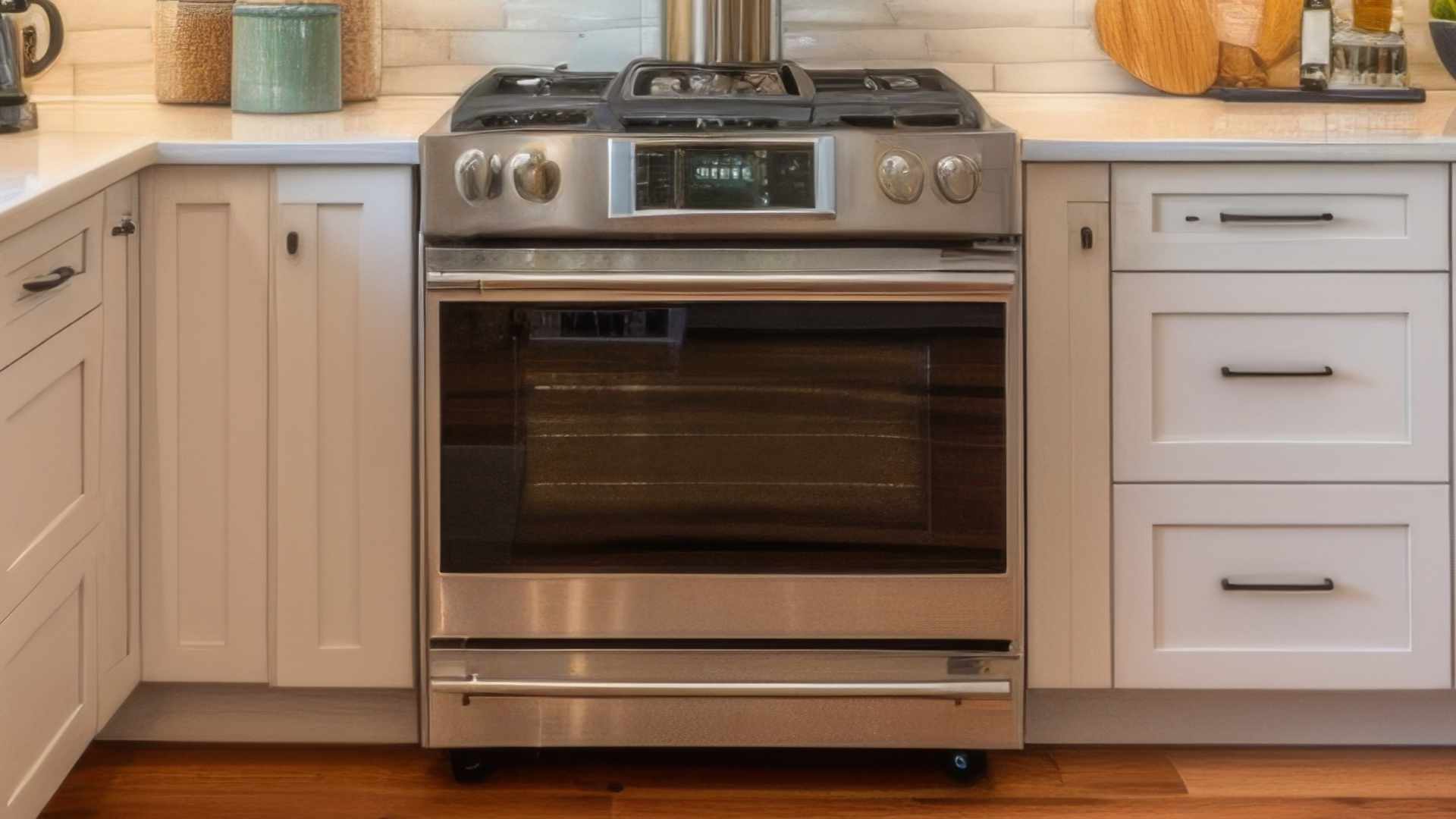
If your oven smells when you turn it on, that smell is telling you something. Not in a vague, metaphorical sense. Literally. The smoke and odour that comes from a dirty oven during preheating is carbonised grease and food residue combusting at cooking temperatures, and it’s migrating into the food you’re cooking. Most people live with it far longer than they should, largely because the smell becomes background noise and the solution feels like a bigger project than it is.
Hiring a professional oven cleaner solves the smell problem in a way that home cleaning usually doesn’t, because the smell comes from places that home cleaning doesn’t reach. That’s the short version. Here’s the longer one.
Why Your Oven Smells in the First Place
The smell isn’t coming from wherever you last wiped. It’s coming from the accumulated residue in the parts of the oven that don’t get cleaned in a standard domestic session.
Every time you cook, grease vapour rises, circulates, and deposits on surfaces throughout the oven cavity. It goes onto the ceiling of the oven, behind the door seal, on the inner faces of the door glass, and on the heating elements themselves. Spillages cook onto the oven floor and sides. Over months and years, these deposits build up, heat-cycle repeatedly, and transform from grease into carbonised material that has a completely different chemical character from fresh cooking residue.
When you heat the oven, that carbonised build-up heats too. It smokes. It smells. In severe cases it can actually catch and produce visible smoke in the kitchen. The smell isn’t a surface thing, it’s a structural thing, baked into layers of residue that have accumulated across every cooking session since the oven was last properly cleaned.
The specific areas that generate the most smell are also the areas hardest to clean at home. The inner pane of the door glass, which sits between the outer and inner door panels and is inaccessible without disassembling the door. The cavity ceiling, which tends to accumulate grease that drips and re-deposits repeatedly. Around and on the heating elements themselves. And under the removable floor panel if the oven has one, where significant build-up can sit undisturbed for years.
What a Professional Oven Cleaner Does Differently
A professional oven cleaner approaches the job as a systematic process rather than a cleaning session, and that process includes access to parts of the oven that home cleaning simply doesn’t cover.
The first thing a professional does that most home cleaners don’t is take the door apart. Completely. The door comes off its hinges and is disassembled to access the inner glass panes, where grease collects and carbonises in a way that’s completely invisible from the outside. This is often where the biggest improvement comes from, because the accumulation between the glass panels is extensive and produces significant smell and smoke during cooking. Cleaning it requires full disassembly, which most homeowners either don’t know is possible or don’t want to attempt.
Oven racks are removed and cleaned separately in a purpose-built dip tank with a solution that dissolves baked-on carbon without the abrasive scrubbing that damages the rack’s surface coating. The result is noticeably better than what’s achievable in a domestic sink with standard products.
The interior of the oven, including the roof, walls, floor, and elements, is cleaned with professional-grade products formulated for heavy carbonised residue. These products have a different specification from supermarket oven cleaners, not because they’re necessarily stronger in a way that makes them dangerous, but because they’re designed for the specific chemical composition of heavily baked-on grease rather than general kitchen grease. Dwell time, the time the product stays in contact with the surface before being removed, is managed properly, which makes a significant difference to how much residue is lifted.
When the job is finished, everything is reassembled correctly. The door glass is cleaned and reinstalled. The racks go back in. The oven is wiped down to remove any residue from the cleaning products themselves, which matters from a food safety perspective. A properly finished professional clean leaves an oven that’s ready to cook in, not one that needs an hour of ventilation before use.
The Smell Comes Back Faster When You Don’t Address the Source
Here’s something worth understanding about the cycle most people get into. They notice the smell, they buy a supermarket oven cleaner, they clean the accessible surfaces, the smell improves for a while, and then it comes back. This happens because the accessible surfaces weren’t where most of the smell was coming from.
The inaccessible areas, the door glass, the ceiling, the floor under the panel, behind the seal, haven’t been touched. They continue heating and contributing to the smell with every cooking session. The partial clean creates a temporary improvement by reducing the contribution from accessible surfaces, but it doesn’t address the underlying cause. The smell returns on roughly the same timeline, the cycle repeats, and the inaccessible areas continue to accumulate more residue with each cooking session that goes by.
A professional clean addresses all of it simultaneously. The smell improvement is more significant and it lasts longer because the source, not just the contributing surfaces, has been properly dealt with.
What the Smell Is Doing to Your Food
This part doesn’t get discussed enough. The smoke that comes from a dirty oven when you cook isn’t just unpleasant. It’s physically in contact with your food.
When carbon build-up heats and combusts during cooking, the products of that combustion circulate in the oven with the food. The rancid quality that sometimes shows up in baked goods, the slightly off taste in a roast chicken that you can’t quite attribute to the chicken itself, these are real effects that come from cooking in a heavily contaminated oven. The food is cooking in an environment that includes the combustion output of years of accumulated grease.
This is more relevant in some cooking situations than others. Long, slow cooking at lower temperatures, where food is in a closed oven for extended periods, produces more exposure than a quick high-temperature roast. Baked goods, which absorb flavours from the environment more readily than meat, are more affected. But the effect exists in any cooking situation where there’s significant residue present.
The Appliance Case for Regular Professional Cleaning
Smell and food quality aside, there’s a straightforward mechanical argument for regular professional oven cleaning that doesn’t get made often enough.
A significant carbon build-up on the interior surfaces of an oven acts as insulation. It absorbs heat that should be reflecting back into the cooking space, which means the oven works harder to maintain the set temperature. Heating elements running at higher loads than necessary fail sooner. Thermostats working under increased load develop inaccuracies over time.
For a mid-to-high-end oven, this matters economically. Replacement heating elements, thermostat repairs, and service call charges add up quickly and exceed the cost of regular professional cleaning by a significant margin. The annual or biannual professional clean is straightforward maintenance that extends appliance life in a quantifiable way.
For people who invested in a quality range or built-in oven, treating it the way you’d treat any other quality appliance, with regular professional maintenance rather than reactive cleaning when something goes wrong, is simply the rational approach.
When to Call Someone In
You don’t need to wait until the smell is severe or the oven is visibly in poor condition. The annual professional clean is the preventive maintenance approach that stops the situation from reaching that point.
If your oven already smells noticeably when you cook, if there’s smoke during preheat, if you can see significant build-up on the surfaces, or if the door glass has taken on a brown, opaque quality, these are signs that the clean is overdue rather than on schedule. At that point it’s not about prevention, it’s about fixing a problem that’s already developed, and the professional visit is the most efficient way to do that.
The cost is modest, the improvement is immediate, and the cooking environment on the other side of it is noticeably better. For most households that cook regularly, making the professional oven clean an annual habit is one of those simple maintenance decisions that pays for itself clearly.