
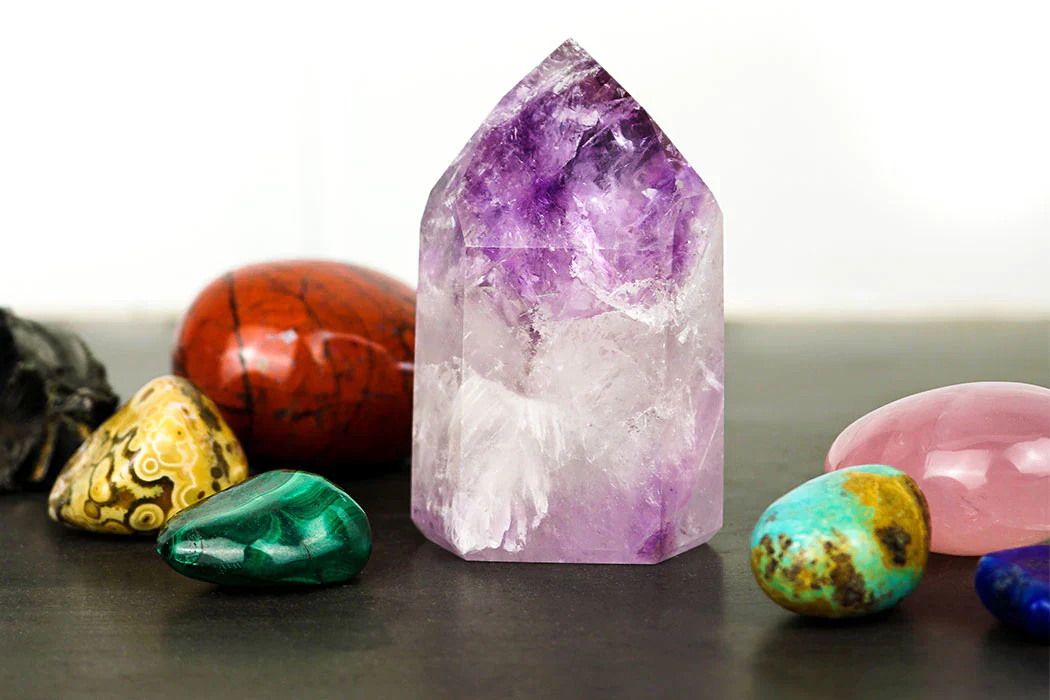
The term Spiritual Stone is used by most people to refer to a mineral, crystal, or smooth rock believed to assist with reflection, repose, security, or wishful intent. Such a general meaning is important as it describes why conversations tend to get mixed up. Others consider stones as holy whereas others consider them as reminders to be used when practicing meditation or to mourn. These are not the same practices. A stone may have cultural, emotional, and ritual significance simultaneously. The most practical point is the best point of beginning: here is whether the rock is more of a symbol, or more of an aid to the senses, or some sort of a working religious instrument in the everyday life.
Why stones gain spiritual meaning across cultures
The reason Spiritual Stone acquire a spiritual meaning is, in part, due to their seeming steadfastness, age, and physical grounding in the earth, qualities that very few objects share. In many cases, a Spiritual Stone is much more likely to become significant through repetition rather than through automatic trust. You have somebody who carries it during a prayer, one who lays it by a sickbed or one who makes it part of family folklore. With the passage of time, the object turns into a focus and feeling on itself. This is not a trivial and irrational process. People habitually give meaning to durable objects since tangible objects aid in putting together memory, ritual and identity where abstract concepts appear too remote and unstable.
Symbolism matters more than mineral rarity
Humanity compares the rarity of stones with the strength that is likely to be the greatest, but the arguments are hardly applicable. Meaningfully, the use of Spiritual Stone functions symbolically by being relevant and not rare. A typical pebble on his river that he gathered during the healing process after falling ill can be even more significant than a luxury crystal purchased in under thirty seconds online. Status may be made by Rarity, but not by intelligent spiritual usefulness. This difference is important, since most buyers are forced to gravitate towards expensive products without questioning how the object in question will be used. Context, memory and repetition help create the meaning, rather than through price tags or any exotic back story.
Common uses in meditation, prayer, and mourning
In the daily activities, the stones are normally utilized to draw attention. A Spiritual Stone may be used on the hands during meditation to provide them with a fixed feeling and prevent them from trembling uncontrollably and keep the mind concentrated on a preferred thought. It can be a sacred time of prayer by distinguishing between normal activity and conscious thought. Stones do not always function in grief. Instead, they turn into grief items, kept in pockets or placed in graves to be remembered. These applications are small but significant. The worth of them is in order and heart, not in deeds that make a fuss of a stone being able to fix the ailment all alone.
What science can and cannot support
Claims that Karma Stone have specific spiritual powers that can cure illness or alter destiny are not scientifically supported. This aspect should be made clear. Nevertheless, the rejection of all the experiences surrounding Spiritual Stone use is also an omission of something important. Behavior can be influenced by objects, expectation, attention, touch and ritual consistency. Those mechanisms are psychologically banal, but they may lead to the actual effects, including less stress, more even breathing, and emotional stability. It is a humane stance, which is a combination of a sincere attitude stones can assist people to arrange inner circumstances, but not to displace medicinal treatment, counseling, and evidence-based practice.
How to choose one without superstition or waste
An extremely reasonable way to start would be purpose. In the case of a goal of meditation weight and texture can be more important than color. Origin can be important more than appearance, especially in case the aim is remembrance. Without such a choice to purchase a Spiritual Stone, there is a tendency to clutter and disappoint. It also promotes mystical language which disguises trade-offs which are real. Molten rocks are easy to move and easy to scratch. Raw stones do not seem artificial but may snare clothing or drop part of an object. Ethical sourcing is also important, particularly where the conditions of mining are non transparent. Select carefully and when offered to you, be aware of the reason behind the available object and the intentionality of possessing it.
Red flags in online advice and crystal selling
The material about the stones on the web may be full of good intentions and fantastic claims. The prelude of danger is confidence. Once a seller declares that a single Spiritual Stone will bring him or her wealth, you can’t get rid of all negativity or mend relationships, the statement is not simply unproven. It is designed to avoid critical thinking. Copied meaning charts in which the same powers are attributed to each stone of every culture, tradition or context is another red flag. This sterotyping practices that are complicated into retail shorthand. More instructive explanations include limits (it is not always right), discussing use cases realistically (such as cost, durability, sourcing), and noting that a stone may merely not resonate.
Care, storage, and daily handling
The nurturing is mostly viewed as mystical cleansing but the mundane maintenance is most often likely to count. This is due to a stone handled on a daily basis, bearing the oils of the skin, dust, and scratches, which may also impact on appearance and feel. There are those users who clean using water but that is not safe to all the minerals. Some of them use a dry cloth and storage. A Spiritual Stone in a pocket might acquire individual meaning more rapidly since it passes through the day-to-day activities but at the same time, the more it is touched, the more it wears out. The pragmatic scale is more straightforward: harness the weaknesses of delicate materials, avoid careless ritualism, and leave use to determine meaning without reducing maintenance to superstition.
When a stone helps and when it becomes avoidance
Emotional life can be supported by a stone, but it may lead to an escape into harder work. The distinction in this case is functional. When one stops and breathes before going back to a challenging conversation, the object aids. When the same individual looks at Spiritual Stone rituals to defer grief or treatment or responsibility, the object is no longer grounding him. It is protecting them against the truth. This difference is significant since comforting practices do not necessarily make people healthy. None of the useful rituals leads to a lack of steadiness in action. Avoidant rituals provide a reprieve and, in the long run, quietly reduce judgment and responsibility.
Final Thought
The most well-grounded is the one that views the stones as facilitating meaning rather than as machines of supernatural control. Such an opinion is also more intellectually sound since it describes what attracts them and what does not. The stone can concentrate on the attention, fulfill the retention, pinpoint the devotion, and sustain the habit formation without placing magic assertions on it. This also considers the distinction between personal ritual and formal religion. Not all worthwhile things are equally sacred. Disciplined and honest use of objects is therefore the most prudent: to evaluate their role regularly, and to practice this way of using them without falling into symbolism in our day-to-day choices.
FAQ
What is a spiritual stone?
A spiritually used stone is a meaningful object for focus, ritual, remembrance, or calm.
Do all cultures understand stones the same way?
No. Meanings differ widely, so universal charts usually oversimplify living traditions.
Can stones heal illness?
They should not be treated as medical treatments or substitutes for professional care.
How should I choose a Spiritual Stone?
Choose by purpose, feel, durability, sourcing, and personal relevance, not hype.
Is expensive always better?
No. Personal context usually matters more than rarity, branding, or polished appearance.