
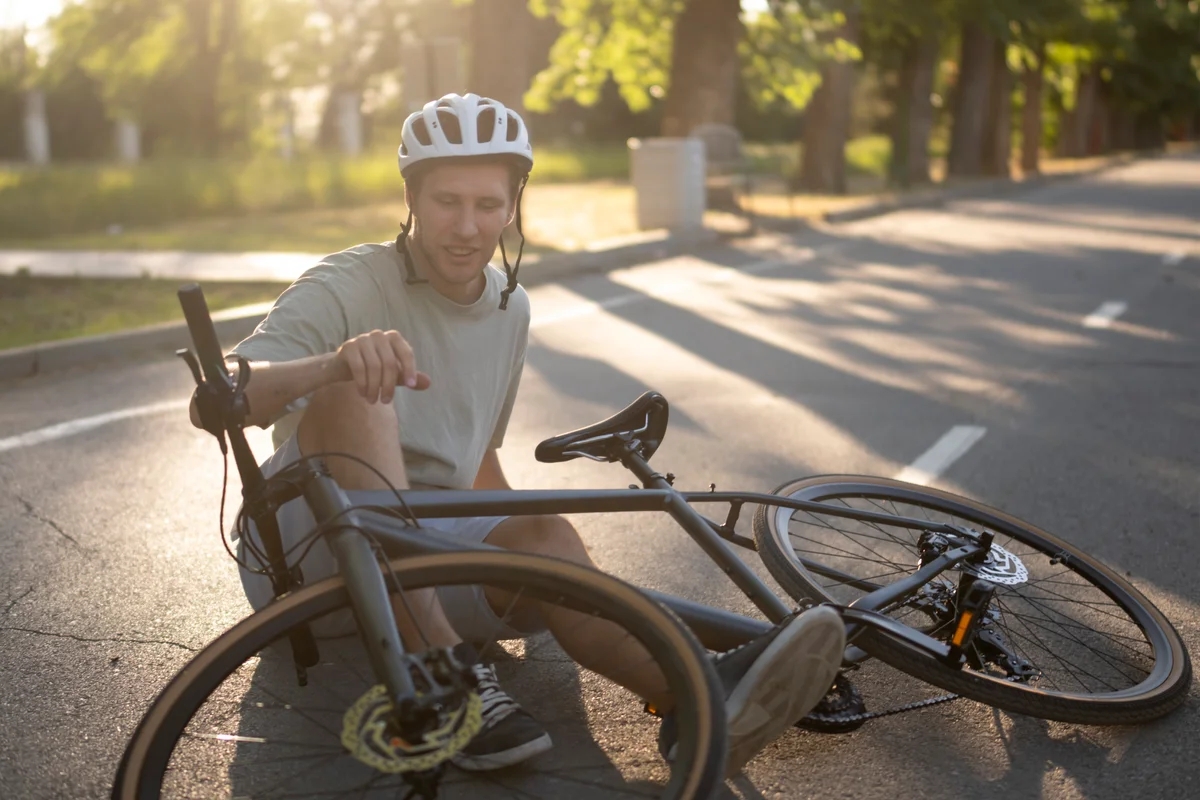
Houston has spent years expanding bike lanes and encouraging safer streets. Yet recent traffic data tells a harder story.
Bicycle deaths in Texas have risen substantially in recent years. According to state transportation statistics, more than 100 cyclists died in a single year in 2015 – with thousands more wounded. Harris County frequently ranks at the top for major traffic injuries – including collisions involving bicyclists.
Behind each number is a rider who never imagined a typical commute or weekend ride would end in an ambulance.
But for many wounded bikers – the incident is only the beginning.
The next difficulty usually begins with a phone call from an insurance adjuster.
The Crash Is Over. The Paperwork Begins.
Emergency crews leave. Traffic clears. The damaged bicycle is loaded into a vehicle or left bent at the curb.
Within days, sometimes within hours, insurance companies begin contacting the injured rider.
“They called me before I even understood the extent of my injuries,” said one Houston cyclist who was struck near Montrose. “I was still sore. I had not even scheduled all my follow-ups yet.”
Insurance adjusters typically want to gather early statements. They ask about:
- What happened
- Where you were riding
- Whether you followed traffic signals
- What injuries you have
The conversation may sound casual. It is not.
Early statements can shape how fault is assigned – and how compensation is calculated.
Why Fault Is Often Contested in Bicycle Cases
Texas follows what is known as a modified comparative fault rule.
In simple terms:
- If you are more than 50 percent responsible, you may not recover damages.
- If you are partially responsible, your compensation may be reduced.
In bicycle crashes, fault disputes are common.
Insurance companies may argue:
- The cyclist was outside the proper lane.
- The rider did not signal.
- The cyclist was hard to see.
- The driver could not react in time.
Houston’s streets can complicate these claims: Construction zones. Faded lane markings. Busy intersections. Narrow shoulders.
Determining fault is rarely as clear as it seems at the moment.
That is why documentation matters so much.
Evidence Can Make or Break a Claim
In many bicycle cases, there is no dashboard camera from the rider’s perspective. There is no metal frame protecting the cyclist. There is often no clear collision mark like two cars would leave.
What helps instead:
- Photos of the scene
- Images of damaged bicycle components
- Helmet condition
- Witness contact details
- Police reports
Security camera footage from nearby businesses can also be critical. But videos are often deleted within days.
Cyclists who are physically able to document the scene place themselves in a stronger position later.
The Quick Settlement Question
Some riders report receiving settlement offers surprisingly fast.
The timing may feel helpful. Medical bills can arrive quickly. Work may be missed. Financial pressure builds.
But early settlement offers are often calculated before the full extent of injuries is known.
Medical professionals note that certain injuries – especially head trauma and soft tissue damage – can take weeks to fully assess.
Once a settlement release is signed – the claim usually closes permanently.
That decision can carry long-term consequences.
Insurance and Medical Bills: A Stressful Overlap
One of the hardest realities injured cyclists face is this:
Medical billing does not wait for insurance disputes to resolve.
Hospitals and therapists will continue billing. Even if liability remains under review.
Some riders turn to:
- Personal health insurance
- Payment plans
- Medical liens
Keeping every receipt and invoice becomes critical.
Documentation provides leverage later.
A Larger Conversation About Safety
Houston has publicly committed to improving traffic safety through initiatives aimed at reducing roadway deaths. Yet the number of cyclist injuries shows that risks remain.
Urban growth has increased vehicle traffic. Vehicle and commuter congestion have added pressure to roadways.
Cyclists remain among the most vulnerable road users.
Unlike drivers – they lack:
- airbags
- steel frames
- reinforced doors
When a collision happens – injuries are often severe. That vulnerability often carries into the insurance process.
Recorded Statements and Social Media
Insurance professionals frequently request recorded statements early in a claim. Legal observers caution riders to be careful.
Statements given while you are injured or under stress can later be interpreted in ways the rider did not intend.
Social media can also complicate matters. A simple post – even one unrelated to the crash – may be reviewed by insurance investigators.
Inconsistent details can weaken a claim. Privacy during the claims process protects the injured party.
When Claims Stall
Sometimes negotiations move smoothly. Other times, they can stall for months.
Liability may be disputed. Coverage limits may be questioned. Medical necessity may be challenged.
When disputes become complex, some injured riders consult a Houston bicycle accident lawyer to understand how Texas law applies to their situation.
Legal review does not automatically mean a lawsuit will follow. In many cases, it clarifies fault arguments, insurance coverage layers, and potential next steps.
The goal is often resolution, not escalation.
The Deadline Few Think About
Texas law generally gives injured individuals two years from the date of the crash to file a lawsuit.
Insurance negotiations do not extend that deadline.
Missing that window can close the door to legal recovery altogether.
While most cases settle before reaching court, awareness of that timeline matters.
Beyond the Crash
For Houston riders, a bicycle crash often unfolds in two stages.
- The first is physical.
- The second is financial.
State data may show rising numbers. News reports may focus on the collision itself. But for the person involved, the aftermath can stretch for months. Your life will not be the same.
There will be a lot of:
- Medical visits
- Insurance calls
- Repair estimates
- Lost workdays
Each step requires constant attention.
As Houston continues expanding bike infrastructure and pushing safety campaigns, the reality remains that crashes still happen.
And when they do, understanding how insurance works – and how to protect your position within that system – can make a measurable difference in recovery.
Because for many riders – surviving the crash is only the beginning of the story.